
University Student Experience (NDA)
Under NDA. In compliance with project confidentiality, proprietary branding, specific details, and raw metrics have been obscured. This case study highlights the methodologies, user flows, and design systems used during the project. Reach out to discuss further details privately.
OVERVIEW
The platform had, until this point, been built entirely around primary and secondary school students. This phase tested whether the same underlying product could actually serve a very different audience: university students, who study, communicate, and are motivated differently than the younger learners the platform was designed for.
Rather than one broad rollout, we ran two distinct pilots with a university partner: a small, high-touch language and culture program for international graduate students, and a large-scale engagement experiment inside a real Introductory Psychology lecture course. Each answered a different question about what university-level engagement actually requires.
TIMELINE
Q4 2024 to Q2 2025
MY ROLE
UI/UX Designer
THE TEAM
UI/UX Designer across two pilots, each with a PM, an analyst/scientist, and an engineer
TOOLS USED
Figma
Two Pilots, Two Different Tests
Q4 2024 – Q2 2025
UI/UX Designer
Culture & Language Pilot Cohort
A small, high-touch pilot for international graduate students, running a full 11-week term.
Psychology Course Participants
A large-scale engagement test embedded directly inside a real Introductory Psychology lecture course.
Live Session Attendance
Average attendance at 1-on-1 speaking sessions in the language pilot, which held steady even as independent homework completion declined over the term.
Quick Wins
Students specifically called out mock interview practice and small talk as the most immediately useful topics, several used the mock interviews to prepare for real interviews the same week.
One student's feedback session noted that hearing themselves compared to their own transcription helped them consciously slow their pace, since classmates had told them they spoke too fast to follow.
The pilot was considered successful enough to justify expanding the model to more courses the following term.
The Problem
University students don't need the same thing younger students do. A high schooler is largely captive to a curriculum; a university student chooses what's worth their time, and drops what isn't. Before investing in a full university-facing product, we needed real evidence, not assumptions, on two open questions: would a small cohort actually show up for a blended AI-plus-human speaking program, and would a large lecture course stay engaged with lightweight oral check-ins over a full semester.
"Pilot" was the operative word, and it shaped what we chose not to build. The PM, the devs, and I insisted on an MVP rather than the fuller feature set a university product would eventually need, on the theory that busy university students mostly wanted to complete that week's work, not explore a platform. We did ship a self-guided practice library alongside the core program as a smaller bet. Students barely touched it, which was itself a useful result: it confirmed the MVP instinct was right, and that a fuller build would have spent real effort on something these students didn't actually want yet.
Selected Works
Culture & Language Program Pilot
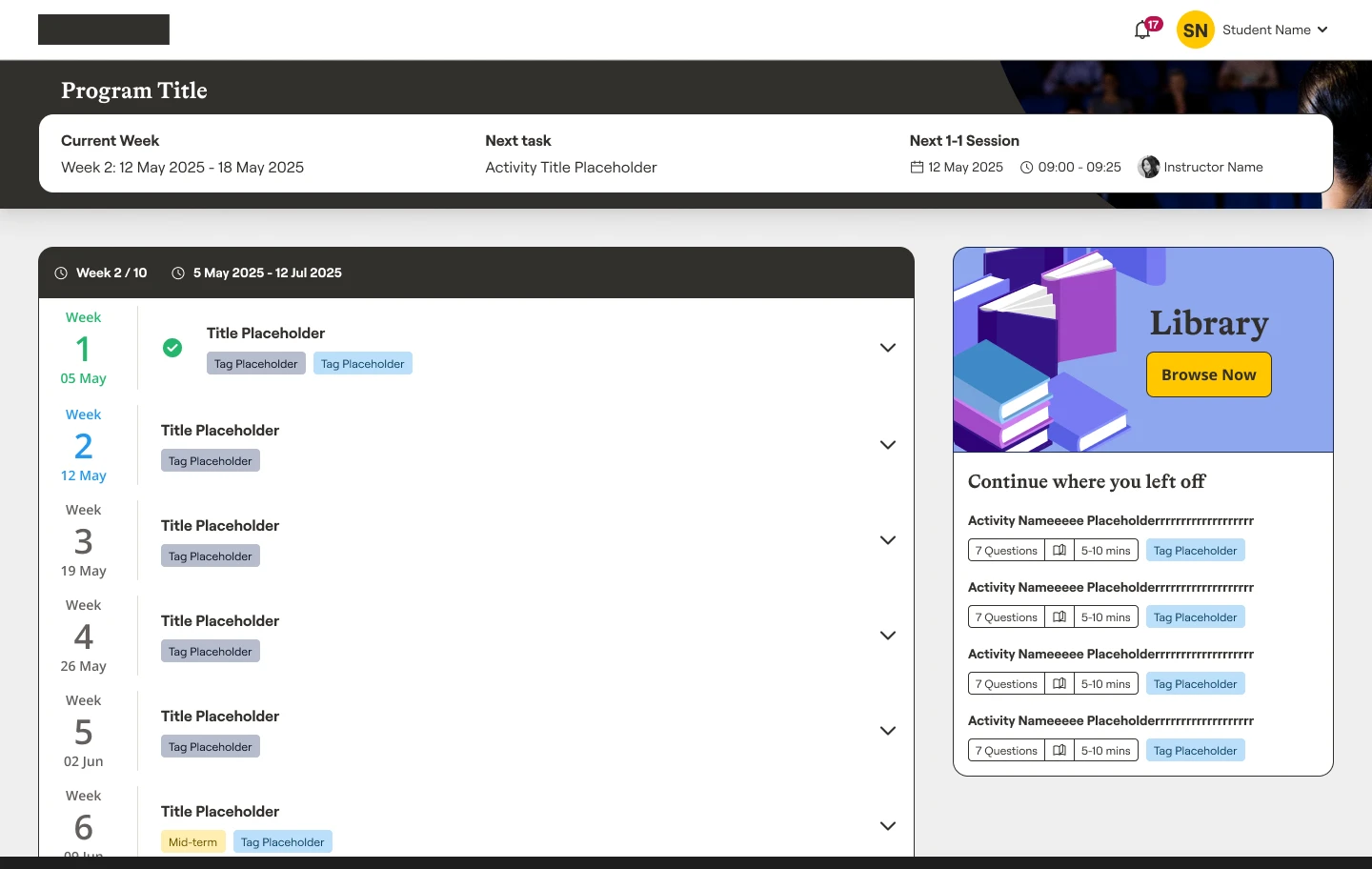
ShippedProblem: International graduate students arriving at a new university face a steep social and professional adjustment, small talk, interviews, cultural norms, that goes well beyond classroom language skill, with no low-stakes way to practice before needing it for real.
Goal: Pilot an 11-week program blending a week-by-week practice curriculum, AI-graded independent exercises, and live 1-on-1 "Practice Buddy" conversation sessions with real people, to see whether a small cohort would actually engage with a blended AI-plus-human model.
- Cohort average rose from 73.8% to 74.9% across the term, and the final speaking task averaged 87.5%.
- Live 1-on-1 attendance held at 76% throughout, even as independent homework completion fell sharply, from 70% on the first checkpoint to 30% on the second, showing plainly which format of practice students actually valued enough to keep showing up for.
- One student described it as the first time they felt safe practicing English without worrying about being judged for a mistake.
- Considered successful enough to justify expanding the model to more courses the following term.
Week-by-week program homepage
Intro Psychology Engagement Experiment
ShippedProblem: A 10-person pilot can tell you whether a concept works at all, but not whether it holds up at the scale of a real lecture course, or whether something as simple as feedback frequency actually changes how much students engage over a full semester.
Goal: Run a controlled comparison inside a real 562-student Introductory Psychology course across all 14 chapters of the term: one group answered oral comprehension questions twice a week with feedback, the other once a week with no feedback, to learn where engagement holds up and where it erodes at scale.
- Students averaged 71% on weekly oral questions, strongest on Personality (79.9%) and weakest on Developmental Psychology (56.2%).
- Engagement declined substantially as the semester went on, from 82% completion in Week 2 down to 46% by Week 16.
- Roughly half the class (49%) still stayed engaged enough to clear the extra-credit completion bar.
- The team's first real read, at meaningful scale, on where oral-question engagement holds up over a full term and where it drops off.
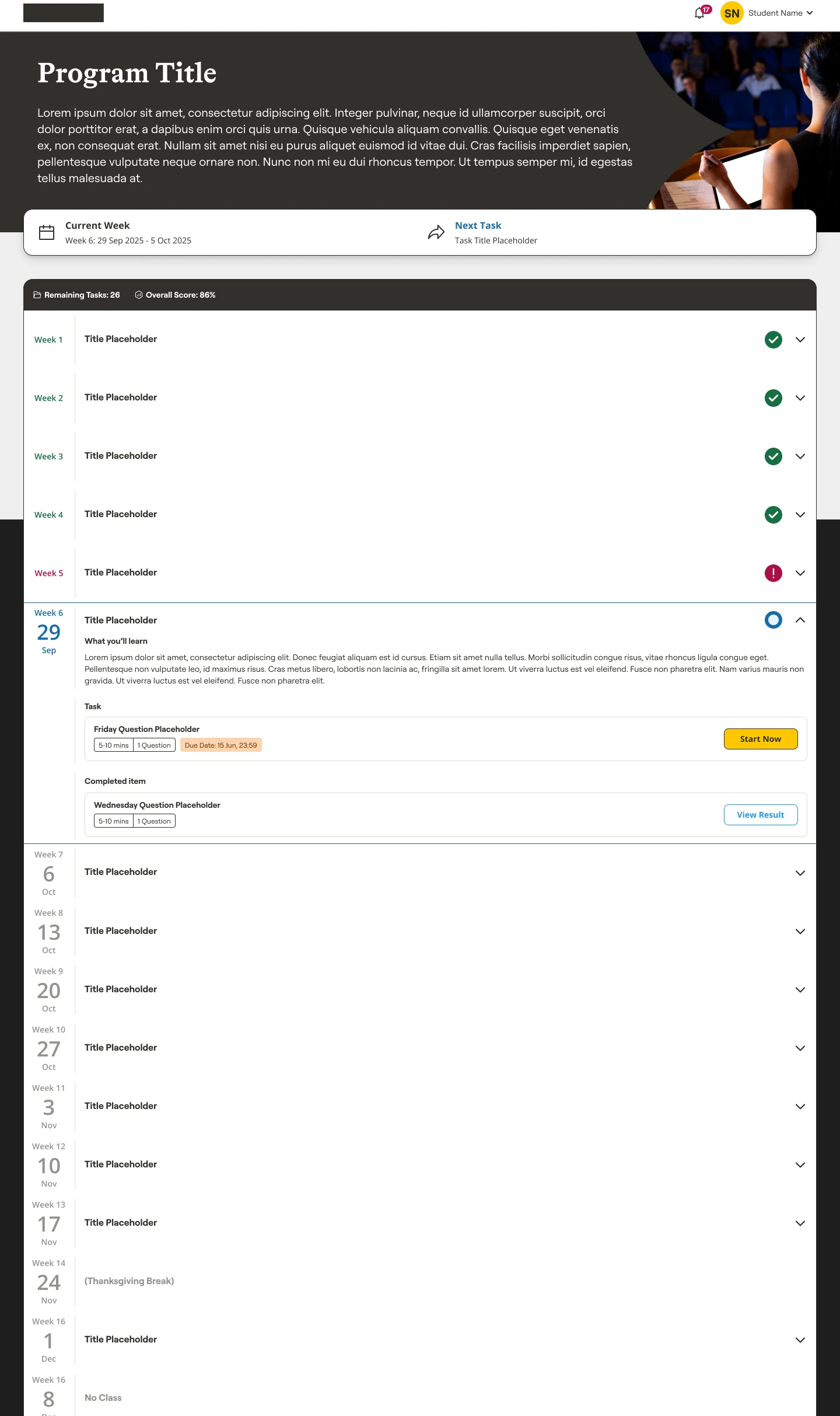
Course homepage with weekly check-ins